The Pakistan Institute for Parliamentary Services (PIPS), on the directions of the Hon’ble Speaker, National Assembly of Pakistan, organized a two-day Parliamentary Exchange and Knowledge-Sharing Programme for the Parliamentary Delegation of the People’s Majlis of Maldives on 23rd –24th September 2026 at PIPS, Islamabad.
The programme provided an important platform for strengthening parliamentary cooperation between Pakistan and the Maldives through the exchange of experiences, institutional practices, and perspectives on contemporary parliamentary affairs. The programme focused on legislative effectiveness, parliamentary scrutiny, public engagement, climate governance, financial oversight, budget scrutiny, and public accountability.
The two-day engagement brought together members of the visiting delegation with distinguished Pakistani parliamentarians and parliamentary experts, providing opportunities for meaningful interaction and mutual learning on shared governance challenges.
Day One: Legislature and Parliament
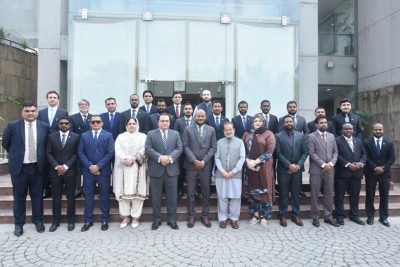
The programme commenced with the recitation of the Holy Quran, followed by welcome remarks by Mr. Asim Khan Goraya, Executive Director, Pakistan Institute for Parliamentary Services. The opening session also included a group photograph of the visiting delegation and PIPS representatives.
Strengthening Legislative Scrutiny – The Legislative Process, Committee Review and Public Hearings
Mr. Muhammad Mushtaq, Advisor (Legislation, Parliamentary Affairs and Training), National Assembly of Pakistan, led the first session on legislative scrutiny and public engagement.
The session explored the different stages of the law-making process, with particular emphasis on the role of parliamentary committees in detailed legislative review. The discussion also highlighted the importance of public hearings and stakeholder engagement in promoting transparency, inclusiveness, and the quality of legislation.
Strengthening Legislative Institutions – Parliamentary Practice, Law-Making and Legislative Effectiveness
Hon’ble Senator Azam Nazir Tarar, Federal Minister for Law and Justice, Government of Pakistan, delivered the second session, focusing on the institutional foundations of an effective legislature.
The session examined parliamentary practice and the law-making process, highlighting the importance of sound procedures, legislative deliberation, and institutional capacity in contributing to effective and responsive legislation. The interaction also provided an opportunity to exchange perspectives on parliamentary practices and legislative effectiveness.
The Role of Parliament in Climate Governance, Adaptation and Resilience
The afternoon session was led by Hon’ble Senator Sherry Rehman, Chairperson, Senate Standing Committee on Climate Change & Environmental Coordination, Senate of Pakistan.
The session explored the role of Parliament in shaping climate policy, legislation, and oversight. Discussions focused on parliamentary contributions to climate adaptation and resilience through law-making, budgetary scrutiny, committee work, and accountability mechanisms.
The first day concluded with a closing tea, providing an informal opportunity for further interaction and exchange between the visiting delegation and Pakistani parliamentary representatives.
Day Two: Public Purse – Parliamentary Sanction and Oversight
The second day focused on parliamentary financial oversight, public accountability, and the role of parliamentary committees in scrutinizing public expenditure and financial policy.
Strengthening Public Financial Accountability – The Role and Working of the Public Accounts Committee
Hon’ble Syed Hussain Tariq, Member National Assembly of Pakistan, led the first session of the day on the role and working of the Public Accounts Committee.
The session focused on post-expenditure scrutiny and the parliamentary mechanisms used to promote accountability in the use of public funds. Discussions covered committee working practices, examination of audit findings, and parliamentary follow-up as important elements of stronger financial governance.
Strengthening Parliamentary Financial Oversight – The Role of the Standing Committee on Finance and Budget-Making
Hon’ble Syed Naveed Qamar, Chairman, Standing Committee on Finance and Member National Assembly of Pakistan, conducted the final substantive session of the programme.
The session examined Parliament’s role in the budget process and the importance of effective scrutiny of public finances. Particular attention was given to the contribution of the Standing Committee on Finance in reviewing fiscal proposals, expenditure priorities, and financial policy.
The session provided an opportunity for participants to exchange experiences regarding parliamentary financial oversight and mechanisms for strengthening transparency and accountability in public financial management.
Conclusion
The two-day Parliamentary Exchange and Knowledge-Sharing Programme provided a valuable platform for parliamentary dialogue and institutional learning between the People’s Majlis of Maldives and Pakistan’s parliamentary institutions.
Through focused sessions on legislative scrutiny, parliamentary practice, climate governance, public accounts, budget-making, and financial oversight, the programme facilitated the exchange of experiences and perspectives on key areas of parliamentary work.
The programme reaffirmed the importance of parliamentary cooperation and knowledge-sharing in strengthening legislative institutions, promoting effective oversight, and addressing contemporary governance challenges. The engagement also contributed to fostering closer institutional understanding and continued parliamentary relations between Pakistan and the Maldives.