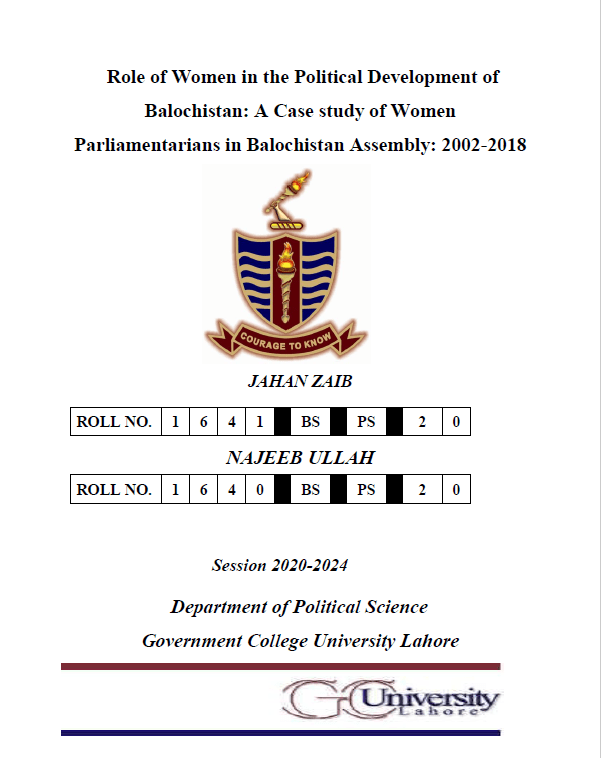
This study examines the challenges faced by women parliamentarians in Balochistan from 2002 to 2018. Women, despite constituting nearly half of Pakistan’s population, remain underrepresented in politics. Cultural and societal norms in Balochistan, a patriarchal society, create significant barriers for women in leadership. The research, based on interviews with female political figures, identifies major challenges including deeply ingrained patriarchal attitudes, limited educational opportunities, and a lack of institutional support. Female politicians often face security concerns, skepticism from male colleagues, and cultural opposition to their participation in public life. Education is repeatedly highlighted as a crucial tool for empowerment, with interviewees emphasizing its importance for both political awareness and economic independence. Furthermore, economic empowerment through initiatives like microfinance is seen as key to enhancing women’s roles in society. The need for mentorship and support networks is also identified as vital to fostering female political leadership. The conclusion highlights the persistent obstacles, such as media stereotyping and inadequate policy implementation, that continue to impede women’s political empowerment in the province. Recommendations include investing in education, promoting gender-sensitive media representation, and increasing women’s seats in political bodies to foster a more inclusive and equitable political landscape in Balochistan.