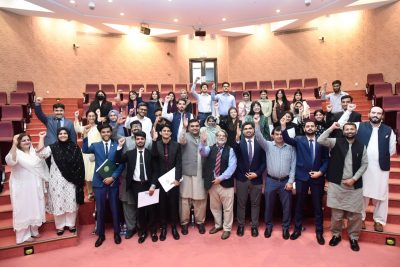
The Pakistan Institute for Parliamentary Services (PIPS), in collaboration with the Senate Secretariat, successfully organized an Orientation Programme for the forty eight Interns of the Senate Secretariat from June 22nd to 29th, 2026, at the Pakistan Institute for Parliamentary Services (PIPS), Islamabad.
The programme was designed to provide interns with a comprehensive understanding of Pakistan’s parliamentary system, constitutional framework, legislative procedures, oversight mechanisms, research functions, and emerging technological developments shaping parliamentary institutions. Through a series of interactive sessions conducted by distinguished parliamentary practitioners and subject experts, participants gained valuable insights into the workings of Parliament and the vital role of democratic institutions in governance.
Day 1: Understanding Parliament, Constitution and Parliamentary Culture
The programme commenced with registration and an opening session, setting the stage for a productive learning experience focused on parliamentary knowledge and democratic governance.
How Does the Parliament Work & A Brief History and Success Stories of the Senate of Pakistan
Ms. Rabeea Anwar, Additional Secretary (HR) & PS to Chairman Senate, Senate Secretariat, delivered an engaging session introducing the interns to the structure, functions, and working of Parliament. She also highlighted the historical evolution of the Senate of Pakistan and shared notable legislative achievements and institutional milestones that have contributed to strengthening democratic governance in the country.
The Constitution of the Islamic Republic of Pakistan: History, Salient Features and Fundamental Rights
Mr. Jam Muhammad Aslam, Additional Draftsman, Ministry of Law and Justice, conducted an informative session on the constitutional development of Pakistan. The discussion covered the historical background of the Constitution, its key features, and the protection of fundamental rights guaranteed to citizens. The session encouraged participants to appreciate the Constitution as the cornerstone of democratic governance and rule of law.
Parliamentary Decorum and Etiquette
Mr. Waqas Ahmad Qureshi, Director Parliamentary Development Programme (PDP), PIPS, introduced participants to the principles of parliamentary decorum, professional conduct, and institutional etiquette. The session emphasized the importance of maintaining professionalism, respect for parliamentary traditions, and adherence to established protocols within legislative institutions.
Day 2: Parliamentary Oversight, Committees and Emerging Challenges
The second day focused on Parliament’s oversight role, committee system, and contemporary challenges arising from the digital information environment.
The Significance, Types, Powers and Functions of Committees
Mr. Muhammad Afzal Soomro, Joint Secretary (Legislation), National Assembly Secretariat, delivered a comprehensive presentation on the committee system in Parliament. He explained the various categories of committees, their powers and responsibilities, and their critical role in legislative scrutiny, public accountability, and policy oversight.
Overview of the Oversight Tools for Effective Governance
Mr. Muhammad Azam, Deputy Secretary Legislation, Senate Secretariat, provided participants with an overview of parliamentary oversight mechanisms. He discussed instruments such as Questions, Motions, Committee Proceedings, and other accountability tools available to Parliament for ensuring transparency and effective governance.
Use of Social Media and Combating Falsehoods: Understanding Misinformation in Parliamentary and Public Discourse
Artificial Intelligence and the Future of Parliamentary Work
Mr. Muhammad Nazir Khan, Director General (IT), PIPS, conducted an insightful session addressing the growing influence of digital technologies on parliamentary work. The discussion highlighted the opportunities and challenges associated with social media, misinformation, and disinformation in contemporary public discourse. He also introduced participants to the transformative potential of Artificial Intelligence in legislative research, information management, citizen engagement, and institutional efficiency, encouraging interns to explore responsible and innovative uses of emerging technologies.
Day 3: Research Support and Legislative Processes
The final day focused on parliamentary research services and the legislative process, enabling participants to understand how evidence-based policymaking and law-making are supported within Parliament.
Parliamentary Research Products
Ms. Tehseen Khalid, Director Research, PIPS, introduced the interns to the diverse range of research services and products developed by PIPS to support Members of Parliament. She highlighted the importance of evidence-based research in facilitating informed legislative decision-making and effective parliamentary performance.
Overview of Parliamentary Research and Research Briefs
Ms. Farhana Wagha, Deputy Director Research, Senate Secretariat, provided an overview of parliamentary research briefs and background papers prepared for legislators and committees. The session illustrated how research products assist parliamentarians in understanding complex policy issues and participating effectively in legislative debates.
The Process of Law-making: From a Bill to an Act
Ms. Naveen Erum, Additional Draftsman, National Assembly Secretariat, delivered a detailed presentation on the legislative process in Pakistan. Participants learned about the various stages involved in transforming a legislative proposal into an Act of Parliament, including drafting, introduction, committee consideration, debate, voting, and presidential assent.
Programme Closing
The programme concluded with closing remarks and reflections on the key lessons learned throughout the orientation. Participants expressed appreciation for the opportunity to interact with experienced parliamentary professionals and gain practical insights into the functioning of democratic institutions.
The Orientation Programme served as an important platform for familiarizing the interns with parliamentary practices, legislative procedures, research support mechanisms, and emerging governance challenges. Through interactive discussions and expert-led sessions, the programme enhanced participants’ understanding of Parliament’s role in democratic governance and inspired them to contribute meaningfully to public service and democratic development in Pakistan.